
The Alignment — Studies
How Environments Train Judgement Over Time
This publication examines how environment quietly train behavior over time, shaping judgment and decision-making long before choice becomes conscious.
The built world instructs without urgency or persuasion.
Through rooms, corridors, thresholds, light, and material, it establishes patterns of movement. Expectation accumulates gradually. What feels intuitive is often rehearsed. What feels like preference is frequently conditioned.
This is not commentary.
It is examination.
What follows are two cases. Together, they describe a choice every environment makes—whether intentionally or not.
Case Study
How Environments Train Judgement Before Choice
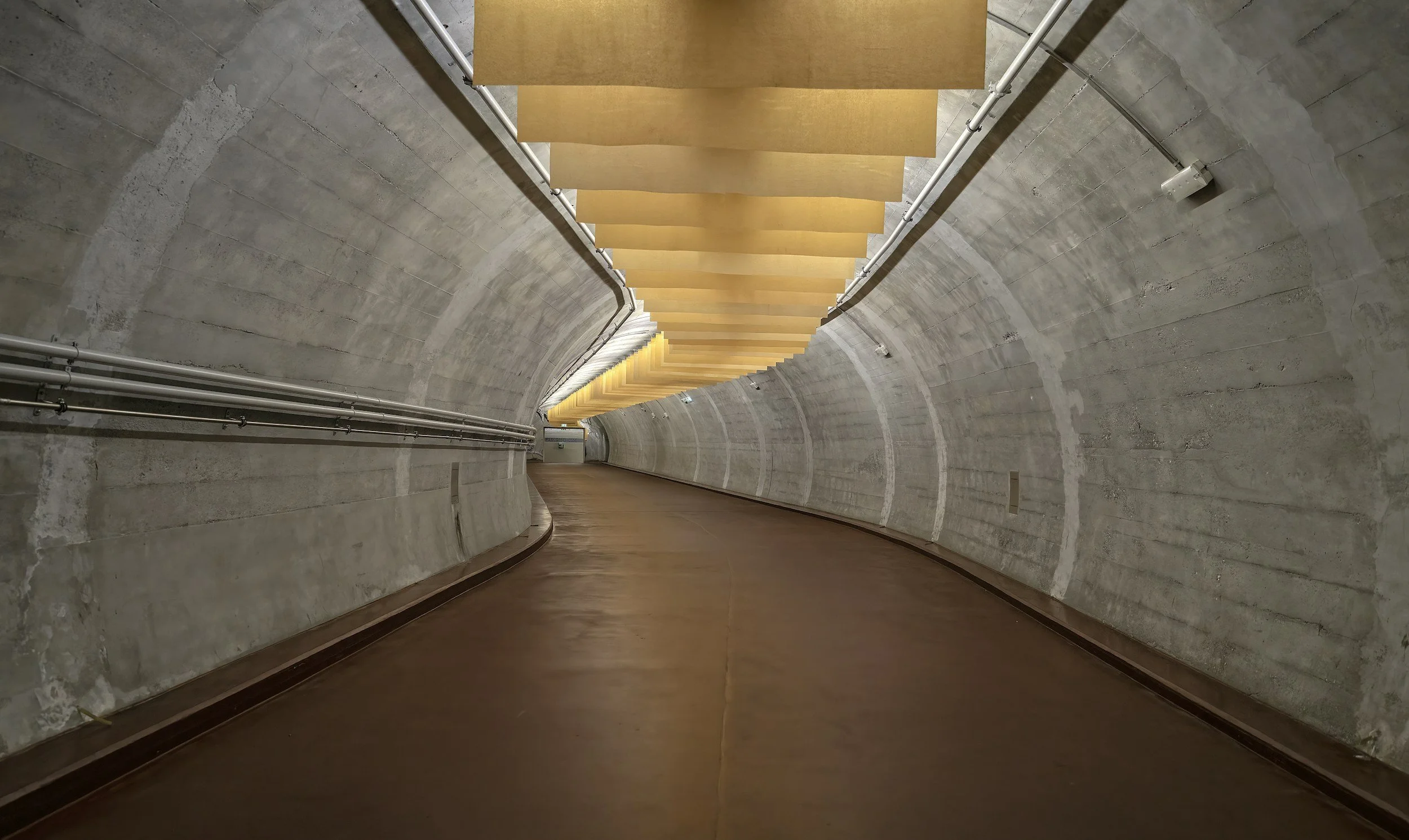
The building does not instruct. There are no signs, no arrows, no posted rules. Yet within months, nearly everyone moves through it the same way.
The setting is a mixed-use residential building with public ground-floor access. Visitors arrive unsure of where to go. Residents move with confidence. No one explains the difference.
The training begins immediately. A primary corridor is wide, straight, and evenly lit by daylight. Secondary paths are narrower, slightly offset, and lit indirectly. The floor beneath the main route is stone—durable, acoustically firm. Peripheral zones soften underfoot.
Nothing forbids alternate movement. Nothing announces preference. The environment suggests.
In the first weeks, people hesitate. They look up. They pause at intersections. Some explore side routes. Others turn back. Choice appears intact.
By the fourth week, patterns emerge. Most traffic flows through the same corridor. Hesitation decreases. Eye lines drop. Visitors begin to follow residents without asking. The building has not become clearer. Its users have been conditioned.
After six months, the dominant path is no longer perceived as one option among many. It is understood as the entrance. Alternate routes are treated as errors. Residents correct guests instinctively. Delivery workers no longer check maps.
The environment has trained judgment quietly enough that users believe it was always obvious.
What occurred was not instruction, but rehearsal.
Repeated exposure reduced perceived options. Light, material, and proportion did the work before conscious choice could intervene. The body learned first. The mind followed later, narrating the outcome as preference.
The space does not coerce. It conditions. And that conditioning travels.

Counter-Case
How Environments Preserve Judgement Over Time
This environment does not converge.
The setting is a cultural building with multiple thresholds and no dominant route. Corridors branch without hierarchy. Light is evenly distributed. Materials remain consistent. Nothing announces itself as primary.
At first, the space feels slower. People pause longer. They look around. Some stop entirely. Movement is cautious. Visitors double back—not because they are lost, but because no path has been rehearsed for them.
Unlike the previous case, repetition does not collapse options.
Over time, patterns emerge without hardening. Different groups favor different routes. Familiar visitors still hesitate. They still choose anew. No threshold becomes the entrance. Even staff move variably, adapting to context rather than default.
The environment refuses to teach correctness.
By withholding hierarchy, it preserves judgment. Choice is never fully outsourced to the body. Hesitation is not punished. Discernment remains active.
Instead of rehearsing certainty, this space rehearses adaptability. Users carry that posture elsewhere. They pause longer before assuming correctness. They tolerate ambiguity without anxiety. They remain responsive rather than automatic.
Both environments function. Both are legible. Both are well designed.
The difference lies in what they optimize for over time.
Synthesis
Trained Certainty vs. Maintained Discernment
These cases describe a choice most environments make quietly.
One optimizes for convergence. The other for capacity.
When environments rehearse the same answer repeatedly, judgment collapses into habit. Decisions feel faster and more confident because alternatives have been removed. Certainty becomes a byproduct of repetition, not understanding.
The result is efficiency—and fragility.
Environments that preserve discernment behave differently. They resist premature hierarchy. They distribute signals evenly. They allow hesitation without penalty. The cost is speed. The return is resilience.
This distinction extends beyond architecture.
Capital follows rehearsed paths. Systems optimized for certainty extract value quickly, but narrow future options. Systems that preserve judgment protect optionality and compound more slowly.
Cities are the cumulative record of what was made easy. When certainty is rewarded, cities harden. When discernment is preserved, they remain capable of change without erasure.
Legacy is not what is remembered. It is what continues to function under new conditions.
Position
At KasiaUSA, we do not design for certainty. We design for endurance.
We work with environments as long-term instruments—spaces that preserve judgment, protect optionality, and remain capable under conditions we cannot yet name.
In a world optimized for speed and premature convergence, restraint becomes a strategic advantage. What lasts is not what resolves quickly, but what continues to support discernment over time.
Environments should not train people to stop deciding. They should make better decisions possible—again and again, long after the moment of first use.